Luxury Homes


HOUSTON



WELCOME TO HOUSTON
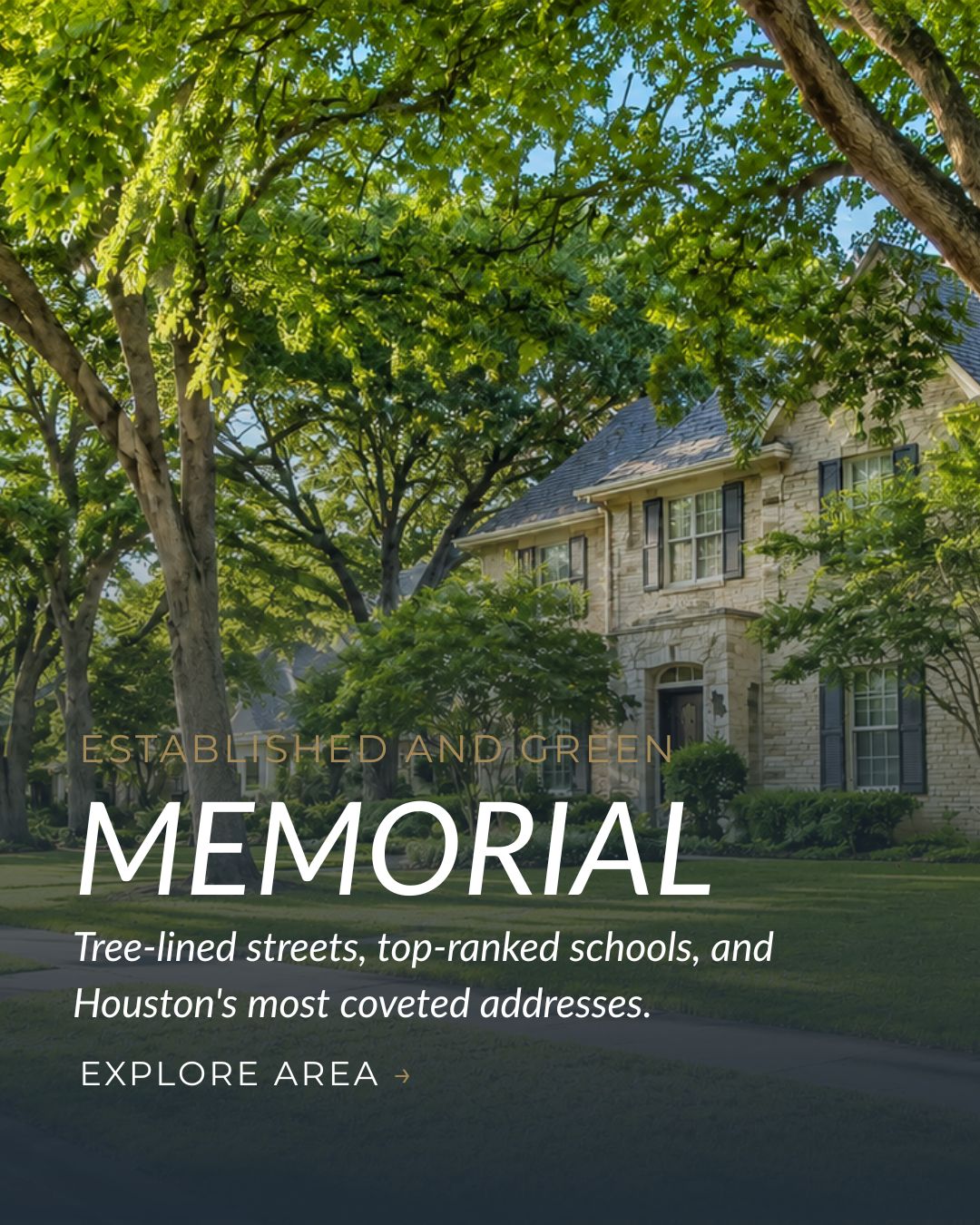
Houston is one of the country’s most dynamic real estate markets, offering distinctive neighborhoods and homes across a wide range of price points. From established luxury communities in Memorial and River Oaks to the walkable, urban atmosphere of the Heights and Montrose, each area provides its own character, amenities, and lifestyle.
The city’s strong economy is supported by major industries including energy, healthcare, aerospace, technology, and international trade through the Port of Houston. Combined with Texas’ lack of a state individual income tax, these opportunities continue to attract homebuyers, professionals, and investors from across the country and around the world.
Beyond real estate and employment, Houston offers nationally recognized dining, arts, sports, parks, and cultural experiences. Whether you prefer an urban neighborhood, an established residential community, or a growing suburban area, Houston provides diverse options for nearly every stage of life.
HOUSTON PROPERTY SEARCH
FIND YOUR PLACE IN HOUSTON


Property searches open on Jen Tran’s Keller Williams website.
HOUSTON AT A GLANCE
LIFE IN HOUSTON
Walkability
Inner-loop neighborhoods can offer walkability scores of 80 or higher.
Bikeability
The Heights, Montrose, and Midtown are among the city’s leading areas.
Transit
Houston is served by the METRORail system and an extensive bus network.
WHY PEOPLE MOVE TO HOUSTON?
A world-class culinary scene, museums, theater, and year-round events.
Home to the world’s largest medical center and a global energy hub.
Cheer on championship teams all year long in a passionate sports town.
One of the nation’s most diverse cities with strong international connections.
No state individual income tax and a business-friendly environment.
HOUSTON MARKET INSIGHTS
July 2026 is the latest completed sales month available in August. Sales and prices increased modestly while record active listings and a 5.5-month supply gave buyers more choice.
Current supply compared with the six-month benchmark often used to describe a balanced market.
Comparison of the reported single-family median and average sales prices.
Percentage change from July 2025 to July 2026.
A practical interpretation of the July 2026 market.
Sales rose 1.6%, pending sales increased 2.6%, and prices remained relatively stable. Active listings reached 40,750, creating a more balanced regional market with greater buyer choice.
These regional figures provide useful context, but individual results can differ substantially by neighborhood, property type, condition, and price range.
Higher listing inventory gives buyers more opportunities to compare homes, complete due diligence, and negotiate thoughtfully. Well-positioned properties can still attract competition.
Buyer Perspective
With 40,750 active listings and 5.5 months of single-family supply, buyers generally have more breathing room than in recent low-inventory years. Financing readiness and property-specific research remain essential.
Homes are still selling, but buyers have more alternatives. Accurate pricing, property condition, presentation, and a neighborhood-specific strategy matter.
Seller Perspective
Days on market increased to 53 while active listings reached a record level. Sellers should position their property against current competition from the start and respond quickly when market feedback is clear.
Regional statistics provide helpful context, but real estate conditions can differ from one Houston-area neighborhood to another. Contact Jen Tran for current information about a specific community or property.
Connect with JenUpdated August 19, 2026. Source: Houston Association of REALTORS® July 2026 Housing Market Update . Released August 12, 2026. July is the latest completed sales month available for this August update. Statistics represent regional market activity and do not predict an individual property’s value, sale price, market time, or future performance. Conditions vary by location, property type, price range, and condition.
DEMOGRAPHICS & EMPLOYMENT
A quick look at several useful demographic and employment indicators for the Houston area.
Houston is the center of one of the country’s largest and most internationally connected metropolitan areas.
A city-level snapshot of household income, housing occupancy, rent, and living arrangements.
Houston has a broad employment base supported by healthcare, energy, trade, construction, technology, aerospace, manufacturing, and professional services.
The Houston–Pasadena–The Woodlands metropolitan area recorded a 5.2% unemployment rate in June 2026, compared with a 4.4% national rate.
Employment conditions may vary by industry, occupation, and location. Current information should be reviewed directly through official labor and workforce sources.
Supported by the Texas Medical Center and an extensive network of healthcare and research institutions.
Includes oil and gas, engineering, power, petrochemicals, hydrogen, and emerging technologies.
Residential, commercial, industrial, and infrastructure construction support regional jobs.
Technology roles support energy, healthcare, aerospace, logistics, and professional services.
NASA’s Johnson Space Center and related contractors anchor the regional aerospace sector.
The Port of Houston and the region’s transportation networks support trade and distribution.
Includes chemical, machinery, metal, and industrial manufacturing operations.
Engineering, accounting, consulting, legal, finance, and corporate services support major industries.
School districts, universities, cities, counties, and public agencies are significant employers.
Sources: U.S. Census Bureau and U.S. Bureau of Labor Statistics . Census figures generally reflect 2020–2024 ACS estimates. Employment rates shown are for June 2026. Figures should be verified before making financial, housing, or employment decisions.
SCHOOLS & ZONING IN HOUSTON
These are several of the public-school districts serving communities featured throughout Jen Tran’s Houston neighborhood guides.
Houston
Serves many neighborhoods within the City of Houston and offers neighborhood schools, magnet programs, early-college options, career and technical education, and other specialized programs.
Visit Houston ISDNorthwest Harris County
A large public-school district serving Cypress, Fairbanks, and surrounding northwest Harris County communities, with elementary, middle, and high-school campuses and varied academic programs.
Visit CFISDKaty & West Houston Area
Serves Katy and portions of surrounding west Houston-area communities. The district provides elementary through high-school instruction, advanced academics, fine arts, athletics, and career and technical programs.
Visit Katy ISDFort Bend County
Serves communities in Fort Bend County, including portions of Sugar Land and Missouri City. Programs include advanced academics, fine arts, athletics, career and technical education, and specialized options.
Visit Fort Bend ISDHouston Bay Area
A prekindergarten-through-grade-12 district serving communities in the Houston Bay Area between Houston and Galveston, including parts of Clear Lake and League City.
Visit Clear Creek ISDPearland Area
Serves portions of Pearland and provides elementary, middle, and high-school education along with advanced academics, fine arts, athletics, and career and technical education programs.
Visit Pearland ISDUse official Texas and district resources to locate public schools and research possible attendance assignments.
Texas Education Agency
Search for Texas public schools and districts or filter by school characteristics through official TEA resources.
Open TEA School FinderTexas School Report Cards
Search the state’s official TXschools.gov website for public-school and district profiles, enrollment information, and accountability results.
Search TXschools.govReview public-school performance using official Texas Education Agency resources instead of relying only on third-party ratings.
Official Texas Profiles
TXschools.gov provides official district and campus profiles, accountability information, enrollment data, and additional public-school details.
View School Report CardsTexas Education Agency
Learn what Texas School Report Cards contain and access the TEA’s official performance-reporting resources.
Visit the TEA ResourceDistrict and campus information is provided for general educational purposes only. It does not guarantee enrollment, school assignment, transportation, program availability, admission, or future performance. Always verify current information directly with the applicable school district before purchasing or leasing a property.
EXPLORE HOUSTON HOMES
Search current homes for sale throughout the Houston area. Use the interactive map to explore available properties, prices, neighborhoods, and home features.
View Homes on the Interactive MapProperty results will open on Jen Tran’s Keller Williams website.

EXPLORE JEN'S FEATURED MARKETS


WHAT EVERY HOUSTON BUYER & SELLER NEEDS TO KNOW
Houston entered 2026 with a more balanced housing market than during the highly competitive pandemic years. HAR reported that 88,634 single-family homes sold in 2025, an increase of 3.8% from 2024, while the full-year median price remained statistically flat at approximately $335,000.
What this means: buyers may have more time and more properties to compare, while sellers can still achieve successful sales when their homes are accurately priced, well prepared, and marketed effectively. Conditions vary by neighborhood, property type, price range, and condition.
The amount needed depends on the purchase price, loan program, down payment, lender requirements, property taxes, insurance, and negotiated contract terms. Buyers should budget for more than the down payment.
Potential upfront expenses can include earnest money, an option fee, inspection costs, appraisal fees, lender costs, title or escrow expenses, prepaid taxes, homeowners insurance, flood insurance when applicable, and the amount due at closing.
A lender can provide a loan estimate based on the buyer’s finances, while a real estate agent can help estimate property-specific taxes, HOA fees, and other ownership costs.
A Houston-area property’s total tax rate may include taxes from the county, city, school district, municipal utility district, and other special districts. Rates can differ between nearby homes, even when they share the same city or ZIP code.
A Municipal Utility District, or MUD, may fund water, sewer, drainage, and infrastructure in certain communities. Buyers should review the total combined tax rate and all applicable special-district notices for the specific property.
Eligible owners using the home as their principal residence may apply for a Texas residence homestead exemption through the appropriate county appraisal district. The Texas Comptroller provides official exemption information.
Start by searching the property address through the FEMA Flood Map Service Center . FEMA maps help identify mapped flood zones, but a property outside a high-risk zone can still experience flooding.
Buyers should also review the seller’s disclosures, available flood and insurance-claim information, elevation information when available, drainage conditions, inspection findings, and an insurance quote for the specific property.
Sellers should answer required flood-related disclosure questions accurately and provide supporting documents required for the transaction.
School-district boundaries do not always match city, neighborhood, county, or ZIP-code boundaries. A Houston, Pearland, Katy, Sugar Land, or other mailing address does not guarantee enrollment in a particular district or campus.
Use the Texas Education Agency School District Locator for general district information, then confirm the specific address through the applicable district’s official zoning or enrollment office.
Attendance zones, transfer rules, transportation, enrollment eligibility, and programs can change, so they should be verified before purchasing or leasing a home.
In a typical Texas resale contract, the option period is a negotiated period during which the buyer may have an unrestricted right to terminate if the option fee and contract requirements are properly satisfied.
Buyers often use this time to hire a TREC-licensed inspector, review the inspection report, investigate the property, and decide whether to proceed, request repairs or other changes, or terminate as permitted by the contract.
The option fee, option-period length, inspection costs, and repair terms are negotiable. TREC explains that the option fee and earnest money generally must be delivered to the escrow agent within the contract deadline. Review all dates carefully with your agent.
Texas law changed on January 1, 2026. A license holder performing certain brokerage activities for a prospective residential buyer must enter into a written agreement with that buyer before performing the activities covered by the law.
The agreement should explain the broker’s services, representation, duration, responsibilities, compensation, and termination terms. Buyers should review it carefully and ask questions before signing.
TREC does not set real estate brokerage fees. Compensation and services are determined by the agreement between the client and the broker.
Closing costs vary by transaction. Buyer expenses may include lender charges, appraisal, inspection, escrow charges, prepaid taxes and insurance, title-related expenses, and other loan or closing fees.
Seller expenses may include agreed brokerage compensation, title-related charges, tax prorations, HOA documents, repairs, concessions, existing liens, and other negotiated costs.
Texas title-insurance premium rates are set by the state, although escrow and other closing fees can vary by title company. Buyers and sellers should review estimates and final closing documents carefully. The Texas Department of Insurance provides additional title-insurance information.
Texas law generally requires sellers of previously occupied one-to-four-family residential properties to provide applicable disclosures regarding the property’s condition and known material facts, subject to statutory exemptions.
The disclosure addresses matters such as property systems, defects, water damage, previous flooding, insurance claims, environmental concerns, and other property conditions. Separate notices may also apply to MUDs, public improvement districts, HOAs, coastal areas, or other circumstances.
The TREC Seller’s Disclosure Notice contains information required by Section 5.008 of the Texas Property Code. Sellers with legal questions should consult a qualified Texas real estate attorney.
Start with recent closed comparable sales from the property’s immediate area, then review competing active and pending listings. Pricing should account for the home’s condition, size, lot, updates, location, flood history, school zoning, HOA, special districts, and nearby new construction.
Before listing, address visible maintenance issues, declutter, clean, improve curb appeal, prepare accurate disclosures, and use professional photography and a coordinated marketing plan.
The full-year 2025 Houston market recorded 88,634 single-family sales, but individual selling times vary substantially. Accurate pricing and strong presentation are especially important when buyers have multiple comparable homes to consider.

PERSONALIZED LOCAL GUIDANCE
Texas Real Estate Commission Consumer Protection Notice
Texas Real Estate Commission Information About Brokerage Services
If you have a brokerage relationship with another agency, this is not intended as a solicitation. All information deemed reliable but not guaranteed.
Each office is independently owned and operated.
Copyright © 2026
If you have a bokerage relationship with another ancy, this is not iIf syfountended as a solicitation. All information deemed reliable but not guaranteed.