
Research Flood Risk Before Buying Houston Home
Houston Real Estate, Flood Risk, Homebuying
A flood map is a useful starting point when buying a Houston home, but it cannot tell you everything about that property's history or future risk. For a clearer picture, you’ll want to check the exact address on official maps, read the seller’s disclosure, investigate local drainage concerns, and ask about insurance well before your contract deadlines.
Why Flood Research Matters for Houston Homebuyers
Houston’s growth, flat terrain and history of severe storms mean that flood risk is a central part of buying a home. Yet many buyers still rely on hearsay: “That neighborhood didn’t flood in Harvey,” or “My friend’s agent said it’s fine.” The key is to research the specific house, not just the general area. Two homes a few doors apart can have different elevations, drainage conditions and flood histories.
Maps, disclosures, inspections and insurance quotes each tell part of the story. When you put them together, you gain a more realistic view of how water might behave on and around the property—and how that could affect your budget, your peace of mind and your long‑term plans as an owner.
📌 Key Takeaway: Treat flood research like you treat your inspection and appraisal. It’s not extra—it’s essential due diligence for buying in Houston.
Step 1: Check the Home’s Flood Zone on Official Maps
Use FEMA’s Map Service Center for the Official Flood Zone
Start with the FEMA Flood Map Service Center (MSC), the official source for effective Flood Insurance Rate Maps (FIRMs). Search the exact property address to view its current mapped flood zone. As of late 2026, Houston’s enforceable FEMA maps for most of the city are based on studies effective November 15, 2019, even though draft updates are under review (FEMA.gov).
When you pull the map:
Record the exact flood zone (for example, Zone AE, Zone X, or 0.2% annual chance).
Save a copy (screenshot, FIRMette or PDF) and note the date you checked, because maps can change over time as FEMA updates them.
💡 Pro Tip: Don’t rely on a zip code search. Always enter the full property address so you see the correct panel and flood zone.
Use Harris County’s Flood Education Mapping Tool for Local Context
For homes in Harris County, add a second check: the Harris County Flood Control District’s Flood Education Mapping Tool. This interactive map displays FEMA’s effective floodplain information in a more user‑friendly format and can help you visualize nearby bayous, channels and mapped floodplains (HCFCD.org).
Harris County also provides MAAPnext tools that show draft flood‑risk data based on updated rainfall and elevation information. These draft maps are educational and can hint at how risk may be viewed in the future, but they are not yet regulatory. For insurance, lending and permitting decisions, FEMA’s effective FIRM still controls (MAAPnext).
What Flood Zones Can and Cannot Tell You
A flood‑zone designation describes a mapped hazard area; it does not tell you whether a specific house has flooded before. It also does not guarantee that water will stay within those lines. Flooding can and does occur outside high‑risk zones, especially with intense local rain or drainage problems (FloodSmart.gov).
If you are unsure how to interpret a map result—especially when zones change between the effective and draft maps—contact the appropriate local floodplain office or a licensed insurance professional. Avoid drawing conclusions from the map color alone.
💡 Pro Tip: Ask, “What does this zone mean for insurance and building rules?” instead of just, “Is it in a flood zone?”
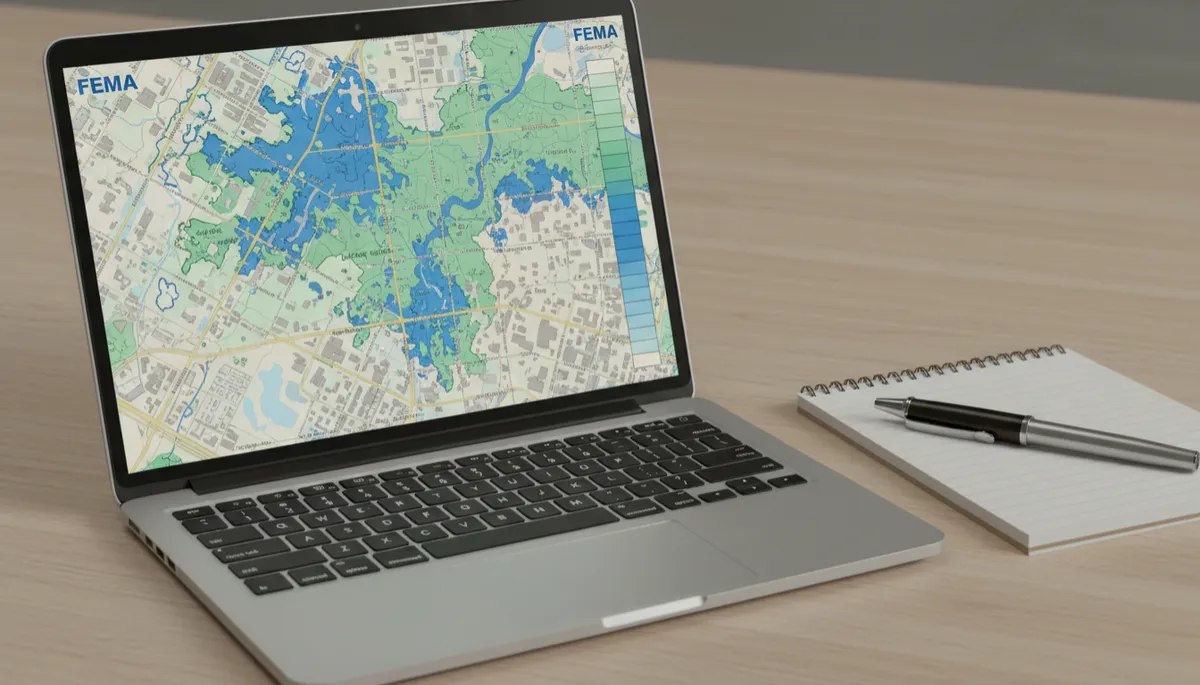
Save your map results with dates so you can track changes over time.
Step 2: Read the Seller’s Disclosure Carefully—and Ask Questions
In Texas, sellers complete a Seller’s Disclosure Notice that includes questions about past flooding, water intrusion, drainage issues and related insurance claims. This is one of your most important documents for understanding a home’s water history, but it only reflects what the seller reports. It does not replace your own research.
What to Look for in the Disclosure
Previous flooding or water penetration: Note any “yes” answers about water entering the home, garage, crawlspace or yard. “Water in the yard” and “water entered the home” describe very different events; both deserve follow‑up, but neither should be interpreted without details.
Repairs and improvements: Look for references to foundation work, drainage changes, grading, French drains, sump pumps or other projects that might have changed how water moves on the lot.
Insurance claims: Pay attention to claims related to water damage, even if they are not labeled “flood.” Ask whether the claim involved rising water, sewer backup, roof leaks or something else.
Follow Up on Any Reported Water Event
If the seller reports any water‑related event, ask for more detail:
What year did it happen, and during which storm (if known)?
Where did water enter, and how high did it get?
What was damaged, and what repairs were made afterward?
Were contractors, engineers or drainage specialists involved? Are there reports, permits or invoices you can review?
Ask whether any landscaping, additions, patios, pools or outbuildings changed water flow on the property after the event. Even well‑intended improvements can redirect water toward the home if not designed with drainage in mind.
📌 Key Takeaway: Treat the disclosure as a starting point, not the final word. Your goal is to turn each “yes” or vague answer into a clear narrative of what happened and what changed.
Step 3: Contact Local Floodplain and Drainage Offices
Maps and disclosures do not always capture localized flooding and drainage concerns. The City of Houston’s Floodplain Management Office notes that its staff can help identify known problem areas that may not appear on FEMA flood maps (Houston Permitting Center).
Find the Right Office for the Property
Inside Houston city limits: Start with the City of Houston Floodplain Management Office.
Outside city limits but in Harris County: Identify the county or local jurisdiction responsible for that address, such as Harris County Engineering or another city’s floodplain administrator.
Questions to Ask Local Officials
Are there known drainage or flooding issues on this street, in this subdivision, or along the nearest bayou or channel?
Have there been recent drainage projects or studies in this area, or are any planned?
Are there records specific to this property, such as substantial damage or substantial improvement determinations, elevation certificates, or permits for major repairs after past storms?
Depending on the home and its location, available records might include permits for structural changes, elevation work or significant drainage modifications. Ask how you can view or request those records, and keep notes of who you spoke with and when.
💡 Pro Tip: Local staff can’t “clear” a home from all flood risk, but they can often share patterns and projects you won’t see on a basic map.
Step 4: Evaluate Lot Drainage and Inspection Findings
An inspection gives you a snapshot of current, visible conditions. It cannot guarantee that the home will stay dry in every future storm, but it can highlight red flags and guide you toward specialists when needed.
What to Look for During Showings and Inspections
Lot slope: Does the yard slope away from the home, or does water appear to drain toward the foundation or low spots near doors and windows?
Downspouts and gutters: Are gutters clear and sized appropriately? Do downspouts discharge well away from the foundation, or do they dump water right at the base of the walls or onto a patio that slopes back toward the house?
Signs of standing water: Look for bare muddy areas, algae lines on fences, water marks on exterior walls, or landscape beds that stay soggy longer than the rest of the yard.
Interior clues: Stains on baseboards, musty odors in closets, warped flooring or recently replaced lower cabinets in isolated areas can all warrant more questions.
Ask your inspector to comment on drainage and grading as part of the general inspection. When they flag a concern—such as water ponding near the slab or inadequate swales—consider bringing in a drainage or civil engineering specialist for a more detailed opinion before your option period expires.
📌 Key Takeaway: An inspection looks at what is visible today. Combine that snapshot with maps, disclosures and local records to understand both history and potential future behavior.
Step 5: Ask About Flood Insurance Early in the Process
Flood insurance is where mapped risk and financial reality meet. Ask about coverage early enough to understand costs and options before your key contract deadlines—not the week before closing. Standard homeowners policies generally do not cover flood damage, so a homeowners quote will not answer the flood‑insurance question (FloodSmart.gov).
Understand When Flood Insurance Is Required
If a property is in a Special Flood Hazard Area (SFHA)—zones such as A, AE, AH, AO or VE—and has a federally backed mortgage, federal rules generally require flood insurance for the life of the loan (FloodSmart.gov). Local building codes also impose elevation and construction standards for homes in these zones (Houston Permitting Center).
However, a lender’s requirement and a property’s overall flood risk are separate questions. Many flood claims come from outside high‑risk zones, and Houston participates in the National Flood Insurance Program’s Community Rating System, which can offer premium discounts for certain properties because of the city’s mitigation efforts (HoustonPermittingCenter.org).
Request Property‑Specific Quotes and Terms
Confirm whether your lender requires flood insurance for this specific property, based on its FEMA flood‑zone designation and loan type.
Ask a licensed insurance professional for quotes that reflect the exact address, not a similar home nearby. Two houses on the same block can have different premiums due to elevation, foundation type and other risk factors.
Review coverage limits, deductibles, exclusions and waiting periods. The National Flood Insurance Program and private insurers may offer different structures and pricing (FloodSmart.gov).
Since April 2023, NFIP pricing has shifted toward property‑specific risk rather than relying solely on flood zones. That means two homes in the same zone can have very different premiums based on elevation, distance to water and other characteristics (Texas Water Development Board).
💡 Pro Tip: Ask for quotes during your option period. If the cost or coverage surprises you, you still have time to renegotiate or walk away.
How to Compare Two Houston Homes with Different Flood Information
When you are torn between two homes, it’s tempting to reduce them to “in a flood zone” versus “not in a flood zone.” That shortcut can hide important differences. Instead, put the findings side by side so you can see where each property stands and what still needs to be verified.
What to Compare | Home A | Home B |
|---|---|---|
Effective flood map result | Record zone, panel and date checked | Record zone, panel and date checked |
Seller’s reported water history | Note answers and follow‑up documents | Note answers and follow‑up documents |
Lot and drainage observations | Summarize inspector or specialist findings | Summarize inspector or specialist findings |
Local information | Note city/county office responses | Note city/county office responses |
Insurance | Record property‑specific quote and terms | Record property‑specific quote and terms |
Unanswered questions | List records or opinions still needed | List records or opinions still needed |
This side‑by‑side approach gives you a clearer basis for deciding what to investigate next and which home fits your risk tolerance. It also helps you spot gaps while you still have time to act under your contract deadlines.
Houston Home Flood‑Research Checklist
Search the exact address on FEMA’s effective map and, for Harris County homes, on the Harris County Flood Education Mapping Tool. Save the results and the date checked.
Read the seller’s disclosure carefully and ask follow‑up questions about any reported water event, repair, or insurance claim. Request supporting documents when available.
Contact the correct local floodplain or drainage office to ask about known issues and available property‑specific records.
Review visible site drainage with a qualified inspector, and seek a drainage or other specialist when a concern calls for expert evaluation.
Ask a licensed insurance professional about property‑specific homeowners and flood coverage, including costs, coverage limits, deductibles and waiting periods.
Review the findings and your contract deadlines with your real‑estate agent before deciding how to proceed with the purchase or negotiations.
For each home, ask: What do we know, what is documented, and what still needs to be verified? The more clearly you can answer those questions, the more confident you can be in your decision.
Frequently Asked Questions About Houston Flood Risk and Homebuying
Does a home outside a high‑risk FEMA flood zone have no flood risk?
No. A map designation does not rule out flooding from intense local rain, drainage system failures or other causes. Many flood claims nationwide come from outside high‑risk zones. Review the individual property’s history, site conditions and drainage, and discuss flood‑insurance options with a licensed professional (FloodSmart.gov).
Is a flood map the same as a home’s flood history?
No. A flood map identifies modeled flood hazards and helps determine insurance and building requirements. Whether water has previously entered a particular home is a separate question you investigate through the seller’s disclosure, local records, inspections and, when available, documentation such as photos or repair invoices.
Can I rely only on the seller’s disclosure?
Use the disclosure as one source of information. It reflects what the seller reports, which may be limited by their knowledge or memory. Follow up on any unclear answer, then add context from maps, local floodplain information, inspection findings and insurance terms. Together, these sources provide a more complete picture than any one of them alone.
Should I get an insurance quote before closing?
Yes. Request quotes early enough to understand the potential cost, lender requirements and coverage options before your key decision deadlines. Ask for estimates tied to the exact property rather than relying on a neighborhood average. With NFIP’s property‑specific rating approach, two nearby homes can have very different premiums (FloodSmart.gov).
Can an agent tell me whether a Houston home will flood?
No one can guarantee future conditions. A knowledgeable agent can help you organize the right questions, request relevant information, and connect with inspectors, floodplain officials and insurance professionals. Your goal is not a promise that the home will never flood, but a well‑documented understanding of its mapped risk, history, drainage and insurance options so you can make an informed decision.
Making a Confident Decision in a Flood‑Prone Market
Buying a home in Houston means accepting that water is part of the landscape—but it does not mean leaving your decision to chance. By combining official FEMA maps, the Harris County Flood Education Mapping Tool, a careful review of the seller’s disclosure, conversations with local floodplain and drainage offices, thorough inspections and early flood‑insurance quotes, you move from vague worry to clear, documented understanding.
Comparing homes with this level of detail may take more effort up front, but it can save you from unwelcome surprises later. If you are weighing multiple properties, consider working with an agent who is comfortable planning this research with you, so you can complete the key steps before making an offer—or at least before your option period ends.
Comparing Houston homes? Connect with a professional who can help you map out the property‑specific research you want completed before you commit, so your next home fits both your life and your risk comfort level.
