
What “Taking Your Time” Really Changes When Buying a Home
Buying a home is one of the biggest decisions many people will make, so it's no surprise that the phrase "take your time" comes up often. Friends, family members, and even real estate professionals encourage buyers not to rush the process. While that advice is well-intentioned, it's worth asking an important question:
What does taking your time actually change?
The answer isn't as simple as "more time equals better decisions." Sometimes slowing down helps buyers gain confidence, understand the market, and choose a home that truly fits their lifestyle. Other times, waiting too long can mean missing opportunities or prolonging uncertainty.
Understanding the difference between thoughtful preparation and endless hesitation can help you move forward with greater clarity. Here's what taking your time can—and can't—change when you're buying a home.
Taking Your Time Helps You Understand What You Really Want
Many buyers begin their search with a long wish list. Over time, priorities often shift as they tour homes, compare neighborhoods, and learn what's available within their budget.
Perhaps a large backyard becomes less important than a shorter commute. Maybe an open-concept kitchen matters more than having an extra bedroom. The longer you thoughtfully explore your options, the more clearly your true priorities emerge.
Rather than focusing only on features, ask yourself:
Which spaces will I use every day?
What kind of neighborhood fits my lifestyle?
Which compromises am I comfortable making?
What features are truly non-negotiable?
Taking time to answer these questions often leads to more satisfying decisions than chasing every new listing.
More Time Allows You to Learn the Market

The housing market can feel overwhelming at first. Prices, inventory, competition, and local trends vary from one neighborhood to another.
Spending time watching listings can help you recognize patterns, such as:
How quickly homes are selling
Common price ranges
Features that influence value
Seasonal changes in inventory
This knowledge doesn't guarantee you'll predict the market, but it helps you become a more informed buyer. Instead of reacting emotionally to every new listing, you'll have better context for evaluating whether a home aligns with your goals.
Confidence Often Comes From Preparation, Not Speed
One common misconception is that confident buyers make fast decisions.
In reality, confidence usually comes from preparation.
Buyers who spend time learning the process often feel more comfortable because they understand each step before it happens. They know what questions to ask, what documents they'll likely need, and what to expect during the home search.
Preparation can reduce unnecessary stress and help you feel more in control without requiring you to rush important decisions.
Waiting Doesn't Always Create Better Opportunities
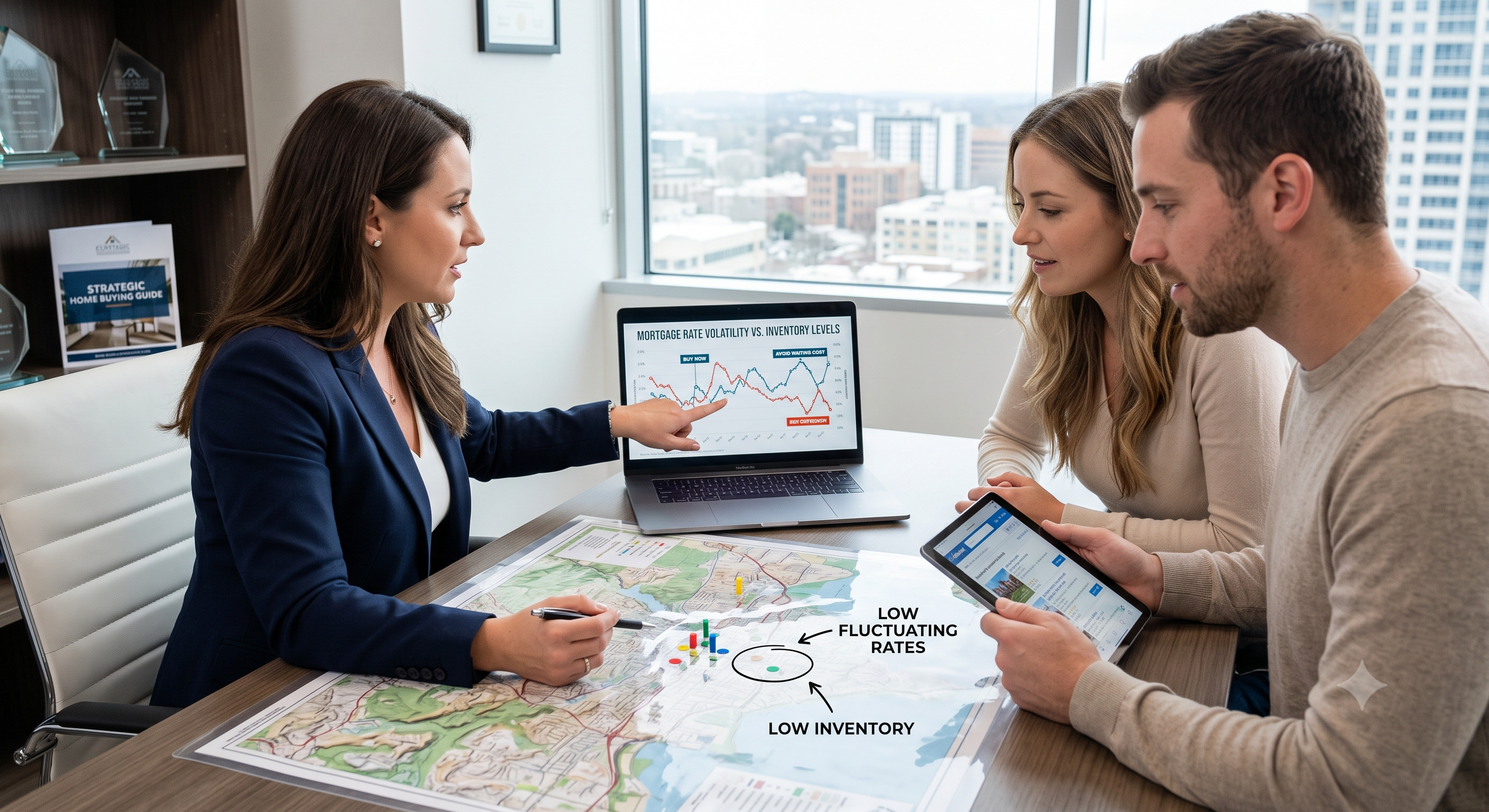
While patience has its advantages, waiting indefinitely doesn't automatically improve your options.
Homes continue to enter and leave the market every day. Neighborhoods evolve. Personal circumstances change. Interest levels, inventory, and competition may also shift over time.
The goal isn't to buy as quickly as possible—but it's also important to recognize when waiting is driven by uncertainty rather than strategy.
If you're delaying because you're gathering information or preparing financially, that time can be valuable.
If you're waiting because you're hoping for the "perfect" moment, it's worth remembering that no market is entirely predictable.
The Perfect Home May Not Exist
Many buyers begin their search believing they'll know their dream home the moment they walk through the front door.
Sometimes that happens.
More often, buyers discover that every home involves trade-offs.
One property may have the ideal location but need cosmetic updates. Another might offer more space but require a longer commute. A third may check nearly every box except one.
Taking your time helps you distinguish between deal-breakers and preferences. That perspective makes it easier to recognize an excellent opportunity when it appears, even if it isn't flawless.
Time Gives You Space to Think Beyond the House
A home is more than its square footage or finishes.
As you slow down, you'll naturally begin evaluating how the property fits your daily life.
Consider questions like:
How long is the commute?
What are weekends likely to look like?
Are nearby amenities convenient?
Does the neighborhood match your lifestyle?
Will the layout still work in a few years?
Thinking beyond the listing photos often leads to better long-term satisfaction.
Avoid Decision Fatigue
Viewing dozens of homes over many months can sometimes have the opposite effect of what buyers expect.
Instead of gaining clarity, everything begins to blend together.
Features that once seemed exciting become difficult to compare. Every home starts to feel similar, making decisions even harder.
To avoid decision fatigue:
Revisit your priority list regularly.
Keep notes after each showing.
Compare homes using the same criteria.
Focus on your long-term goals instead of chasing every new listing.
Sometimes simplifying your search creates more clarity than expanding it.
Balance Research With Action
Research is valuable—but eventually, every buyer reaches a point where additional information produces diminishing returns.
If you've toured homes, understand your priorities, and feel informed about your options, continuing to wait may not provide significantly more insight.
Instead of asking, "What if something better comes along?", consider asking:
Does this home meet my most important needs?
Can I picture myself living here?
Am I making this decision based on facts rather than fear?
Those questions often provide more meaningful guidance than trying to predict future market conditions.
Practical Ways to Make the Most of Your Time
If you're taking a thoughtful approach to buying a home, use that time intentionally.
Some productive ways to prepare include:
Create a ranked list of must-haves versus nice-to-haves.
Explore neighborhoods at different times of day.
Attend open houses to compare layouts and features.
Learn common real estate terminology.
Track listings to understand local pricing trends.
Discuss your goals openly with your real estate professional.
These steps help transform waiting into meaningful preparation.
Finding the Right Balance
Buying a home isn't about moving as quickly as possible or delaying every decision until conditions feel perfect.
It's about finding the balance between preparation and action.
Taking your time can help you better understand your priorities, gain confidence, and make informed choices. But eventually, every buyer reaches a point where the decision comes down to trust in the preparation they've already done.
The goal isn't to eliminate every uncertainty—that's impossible. The goal is to move forward when you have enough information to make a thoughtful decision that aligns with your needs, lifestyle, and long-term goals.
As you continue your home-buying journey, remember that the most successful buyers aren't always the fastest or the slowest. They're the ones who use their time wisely, stay focused on what matters most, and remain flexible as they search for a place they'll be happy to call home.
If you're preparing to buy, continue learning, ask questions, and explore your options with confidence. Every step you take today can help you feel more informed and ready when the right opportunity comes along.
